SOBA (Self Owned Biometric Authentication) Network verifies your users humanity without expensive equipment or proprietary software integrations, with the user self owning their biometric data through a Zero-Knowledge Identity platform.
Enable your users to validate themselves using their own device and without storing biometrics in a central location
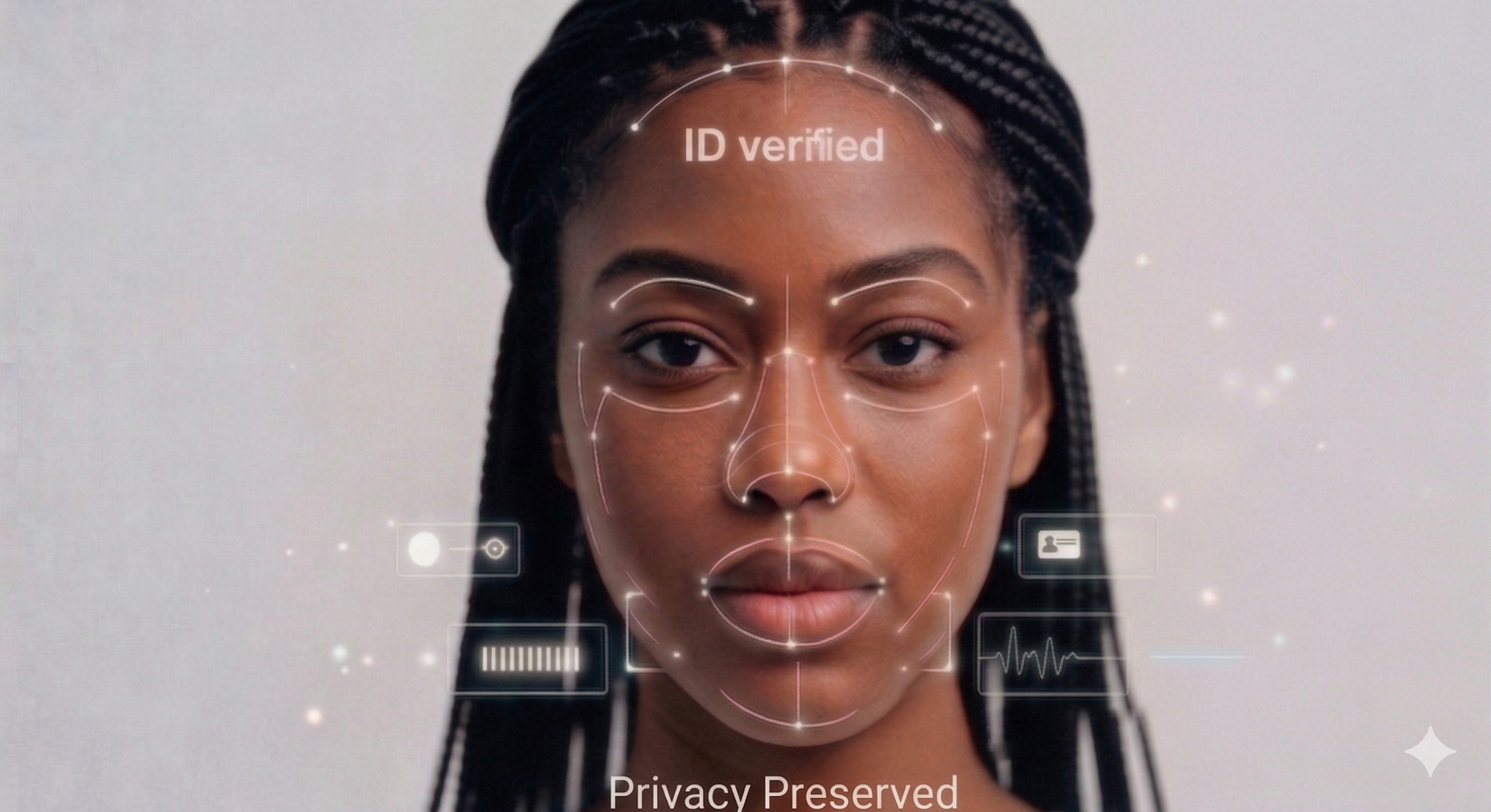
Users owns their data, reducing or eliminating the need for data storage and the associated liability.
No hardware needed. Users use their own smartphones, eliminating expensive infrastructure and maintenance costs.
Allow organizations to confirm a user is real rather than a bot, AI, or proxy, without storing personal data.
Go live in minutes. Bypasses heavy development time with a simple redirect link and dashboard that integrates into your existing workflows.
Verification for those who are vulnerable, stigmatized or have legitimate concerns on being identified.
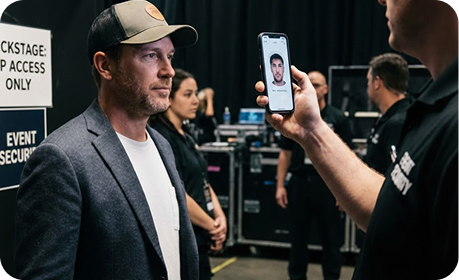
Verify VIPs without compromising their privacy.
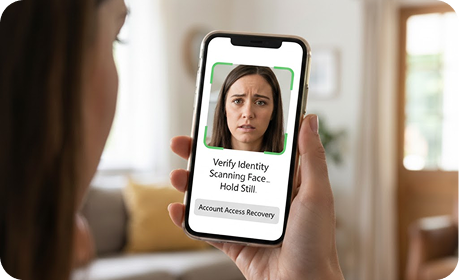
Verify ownership of account through a self-owned biometric face scan.
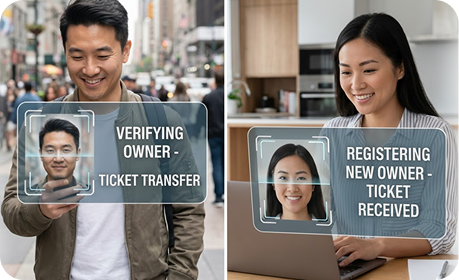
Protect against ticket scammers and bots while verifying authenticity of tickets.
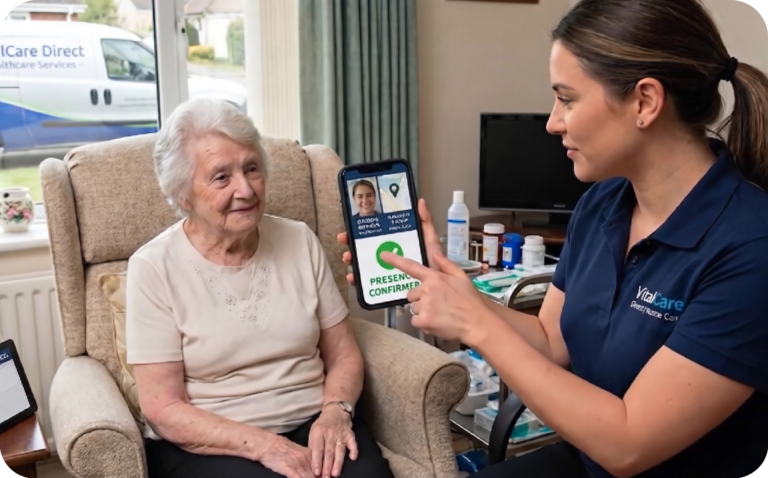
Verifying a person’s location using a combination of geo-tagging and facial verification
Battle-tested through protection of healthcare data, government tender auctions, and securing financial institutions. "Connect with us to delve deeper into our zero-knowledge verification platform.
Sign up on our dashboard, create an event, and we’ll provide you with a button to add into your website or app. Then we’ll handle the rest.
Need more? Read our tech doc to see how you can get more from the platform through our API integration.
Watch the quick 1 minute video that shows you how to get started or try our free trial version here.
Choose a plan and log in to our dashboard to get started.
Note: Verification credits reset monthly, Registration details retained monthly
SOBA (Self Owned Biometric Authentication) is a Zero Knowledge Self Verification System allowing to validate identity for various services, like entering an event or taking a test, without ever needing to send full biometric data to a single external company or central database. We verify a person’s “humanhood” while ensuring ownership of the biometric is with the user.
Most traditional systems store your “Biohash” on their own servers, meaning they control and possess your biometric details. SOBA Network flips this model:
The network is designed for any situation where you need to prove you are “you” without compromising privacy. Common uses include:
No. Unlike other systems that require expensive proprietary hardware, SOBA is designed to work with the devices you already own, such as your smartphone camera.
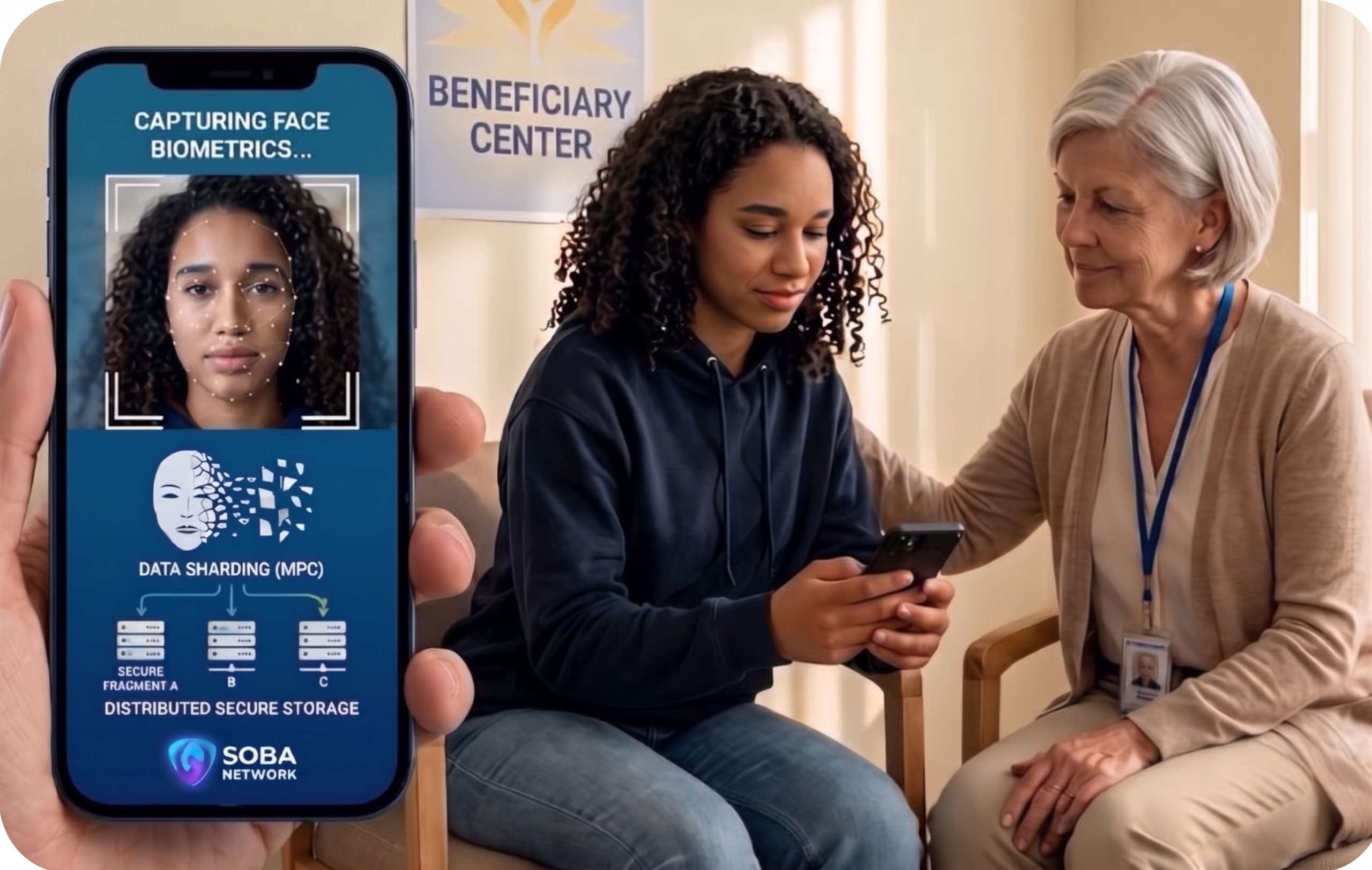
No. Your device uses your camera to create a “Biometric Hash” (a long string of numbers). As soon as that math is done, your biometrics are split into multiple unrecognizable pieces and each pieces are re-encrypted and sent separately to different servers across the decentralized network. The original photo is then deleted. No one ever sees your photo and only these unrecognizable pieces are stored in separate servers.
MPC stands for Multi-Party Computation. Imagine taking your biometric hash, breaking it into multiple puzzle pieces, and hiding each piece in a separate, high-security vault . To use your hash, you need a “threshold” of those vaults to talk to each other. If a hacker breaks into one or two of the vaults, they only find a useless piece of a puzzle. They can never “see” your face or your full identity.
Blockchain provides two fundamental layers of security and autonomy for every user on the network:
• Immutable Public Ledger: Every biometric registration and verification event is logged to a public blockchain. This creates an immutable record that a verification occurred without ever compromising or revealing the user’s raw biohash. This ensures full auditability and transparency for both the user and the verifying platform.
• User-Centric Control: By owning a blockchain address, users use their personal private key to control the “secret-sharing” of their data within the network’s encryption engines. This architecture ensures that the user, not a central authority, remains the sole owner of their biometric hash and must authorize any request for verification.